What is the Almabtrieb?
The Almabtrieb is a colourful and authentic tradition of the Alpine region: a festive return of the livestock (primarily cows) from the mountain pastures (Almen) to the villages at the end of summer. In Reith im Alpbachtal, this event is celebrated not just as a farming tradition, but as a grand folk festival with music, handicrafts, local delicacies, and a unique atmosphere.
The Almabtrieb in Reith im Alpbachtal: a tradition with deep roots
Origin and meaning
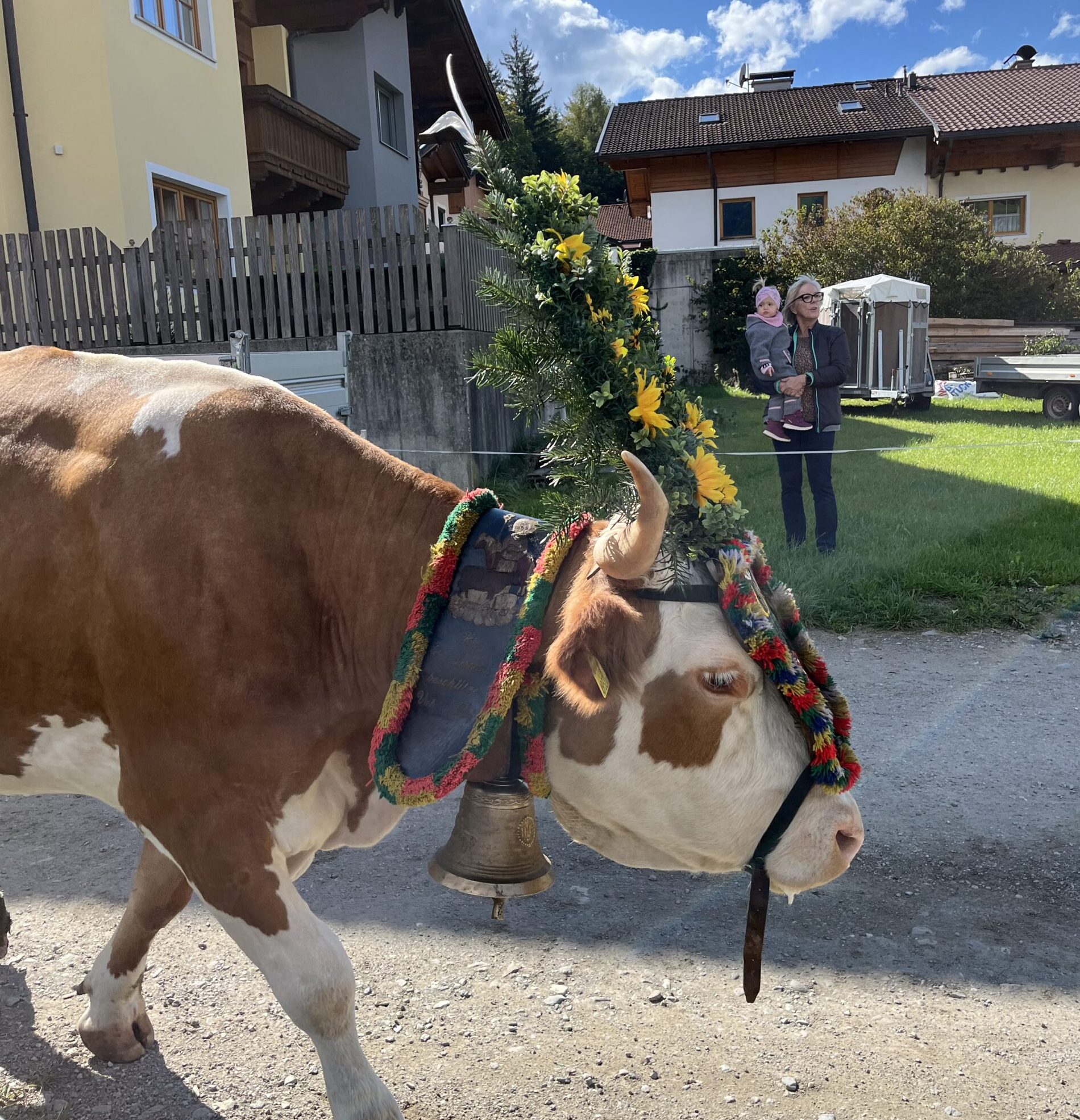
The Almabtrieb in Reith im Alpbachtal dates back to centuries-old farming traditions and marks the end of summer on the mountain pastures. For farmers and herders, it symbolises a successful season: the safe return of their livestock after months of grazing on the high alpine meadows. The cows are strikingly adorned with floral wreaths, colourful ribbons, gleaming headbands, and bells, as a sign of good fortune and prosperity.
Why two dates?
In Reith im Alpbachtal, the Almabtrieb takes place **twice a year**, on the **last two Saturdays of September**. This is because the cattle return from various regions (such as Achensee, Zillertal, and Alpbachtal). Due to the scattered locations of the alpine pastures, the return is spread over two days, allowing all farmers and their animals to participate.
Programme and highlights of the party
The progression of the Almabtrieb
- Early morning (around 6–7 a.m.): The farmers and their families decorate the cows with traditional ornaments (flower wreaths, ribbons, bells) and set off on foot toward Reith im Alpbachtal.
- 10:00 a.m.: The festival begins with a concert in the town square by the local band, followed by a parade through the village.
- Around 12:00 p.m.: The beautifully decorated cows arrive in the village, where they are welcomed by the village community. The farmers accompany their animals on foot.
- Throughout the day: There is a farmers’ and crafts market, where visitors can enjoy:
- Regional specialties (such as Tyrolean bacon, cheese, and dumplings)
- Traditional crafts, such as woodcarving, basket weaving, gold embroidery, and candle making
- Live music (Alphorn players, “Goasslschnalzer,” and Tyrolean folk music)
- In the evening: The festivities continue with dancing, food, and drinks, often combined with the Kirchtagsfest (village festival).
An admission fee is required.